Three briefs, four video models: Seedance 2.5, Kling VIDEO 4.0, MiniMax H3 and FLUX 3
A helmet-cam motocross stunt, a character sheet brought to life and a runner in New York, run on the models side by side, with every prompt shown, what changed between them, and what each clip cost and how long it took.
Radek Rudnicki · draft for the Runware blog · — min read
At a glance
Three briefs, ten-second HD clips, generated from Genobi Studio: Seedance 2.5, Kling VIDEO 4.0 and MiniMax H3 on every brief, and FLUX 3 Video on the third. Each model got the same brief, written to its own prompting guide. The prompts are shown under every clip, with changes marked. The models ran side by side, not one after another. Each finished in three to five minutes. A 10 s HD clip cost from $0.80 (MiniMax H3) to $2.32 (Seedance 2.5).
The short version: Seedance 2.5 for fast sports realism, FLUX 3 Video for natural realism and a film look, MiniMax H3 for value, and Kling VIDEO 4.0 in between: close to Seedance on hard motion for less, and the best at following the sound brief. Every clip shown is the best of a few generations per model, and each brief ends with what the models did well and where they fell short.
One line once the repos are public: the tool is open source and runs with your own Runware key.
How the three models differ
Before comparing outputs, compare contracts: what each model accepts decides what you can ask of it. The cells come from Runware's model schemas (read 10 Nov). The frame rate and sound rows were checked on 14 Nov against the makers' own pages. The output frame rate is measured with ffprobe on the original files: every clip in this post came back at a constant 24 fps (241 frames for Seedance, Kling and FLUX, 243 for H3). We never asked for a frame rate, so that is what each model delivers at these settings.
Kling VIDEO 4.0
Seedance 2.5
MiniMax H3
Reference video
1–5, 3–30 s each, 30 s total, min 700 px a side
up to 10
up to 3, billed per second
Reference audio
none (element voices only)
up to 10, 2–30 s
up to 3; video and audio share 15 s
Reference images
up to 10, 300 px a side or more
up to 10 in Genobi (schema: 30), 300 px or more
up to 9, 256 px or more
Start frame with references
yes
no, use a reference image
no, use a reference image
Addressing in the prompt
<<<image_1>>>
@Image1@Video1@Audio1
"Image 1", "Video 1"
Camera
prompt, or the camera path of a reference video
prompt only
prompt only
Durations
3–30 s
4–30 s, or auto
4–15 s
Output frame rate
24 fps (measured)
24 fps (measured)
24 fps (model card, measured)
HD output in this test
1280×720
1280×720
1344×768 (H3's 768p tier)
Makes its own sound
always, no off switch
yes, settings.audio turns it off
always, no off switch
Seed
no
to check
to check
Published rate, HD
$0.157 per second
$0.2304 per second
$0.08 per second
LTX-2.5 and FLUX 3 Video sit in the same Arena and are not part of this round.
How we approached it
Same brief, different prompts. None of the three models has a camera field or a negative prompt, and each reads a prompt differently:
Kling wants reference roles first, then the setting, then the beats.
Seedance wants the shot first.
H3 wants plain sentences about the picture, then the sound.
Sending one prompt to three models tests the prompt, not the models. So we started from one brief, ran it, and changed the wording per model where its guide said it would help. The prompts below are the ones actually sent, typos included, with the changes marked against the first version.
Every clip on this page is a pick. We ran each model a few times per brief and show its best take, chosen by eye, so you see each model at its best on the brief. This is an evaluation, so each “Our take” gives credit where a model earned it and names the faults we saw.
Seedance, Kling and H3 ran through Runware's Models API on one key: one async videoInference task per clip, 10 s at HD, the cost Runware reports (includeCost) recorded on the run. Runware sets no hard concurrency limit and finds 2–4 requests at once gives the best throughput (rate limits, checked 15 Nov). So the three models ran in parallel, and the wait was the slowest clip, not the sum of all three.
Brief 1: motocross, camera on the rider's head
A stunt clip in the style of a sports broadcast: rain, mud, a sunset, a commentator, and a backflip seen from a camera on the rider's helmet. This is a hard ask on purpose. A helmet-cam backflip means the whole horizon rolls through the frame, and in our earlier runs on FLUX 3 Video the flip never completed.
“motocross riding, with camera on drivers head looking at the steering bar with interface, dynmic jumps with time warp and slow down half way through the trick … Saying "oh noo" once the here does full backflip and lands full of dirt …”
All three play on one clock and start muted. Press a speaker to hear one clip at a time. Open “Prompt” under a clip for the exact text sent.
Cost is what Runware reported for the run. Time to result is from submission to the run's last update in Genobi, so it is approximate. Seedance's $2.32 is slightly over its published $0.2304/s × 10 s because the clip came back at 10.08 s.
One sentence that kept the camera on the helmet
On the first prompt, all three models cut away to a trackside view for the flip. Adding one clause, “same camera view from the drivers head throughout the video”, plus “no cuts” for Kling, kept Seedance and Kling on the helmet through the whole flip, horizon upside down. Kling's second version was the better of the two. H3 never held the helmet view: across the prompts we tried, it cut to a third-person view for the flip every time.
Seedance 2.5 and Kling VIDEO 4.0 on the revised prompt.
Our take
A deliberately hard stress test, and Seedance handled it best: for sports realism with fast, extreme physics it is still the one to beat. Kling got there too, for less, though it did odd things with the rider ahead; every model nailed the rain, the sunset, the slow-motion and the synced sound, but all of them twisted or cut away during the flip, so the physics is not fully there yet. On sound, Kling edges it: the prompt asks for a commentator, and Kling kept one talking throughout both of its clips, where Seedance brought the voice in only at the very end.
Brief 2: a character sheet as storyboard
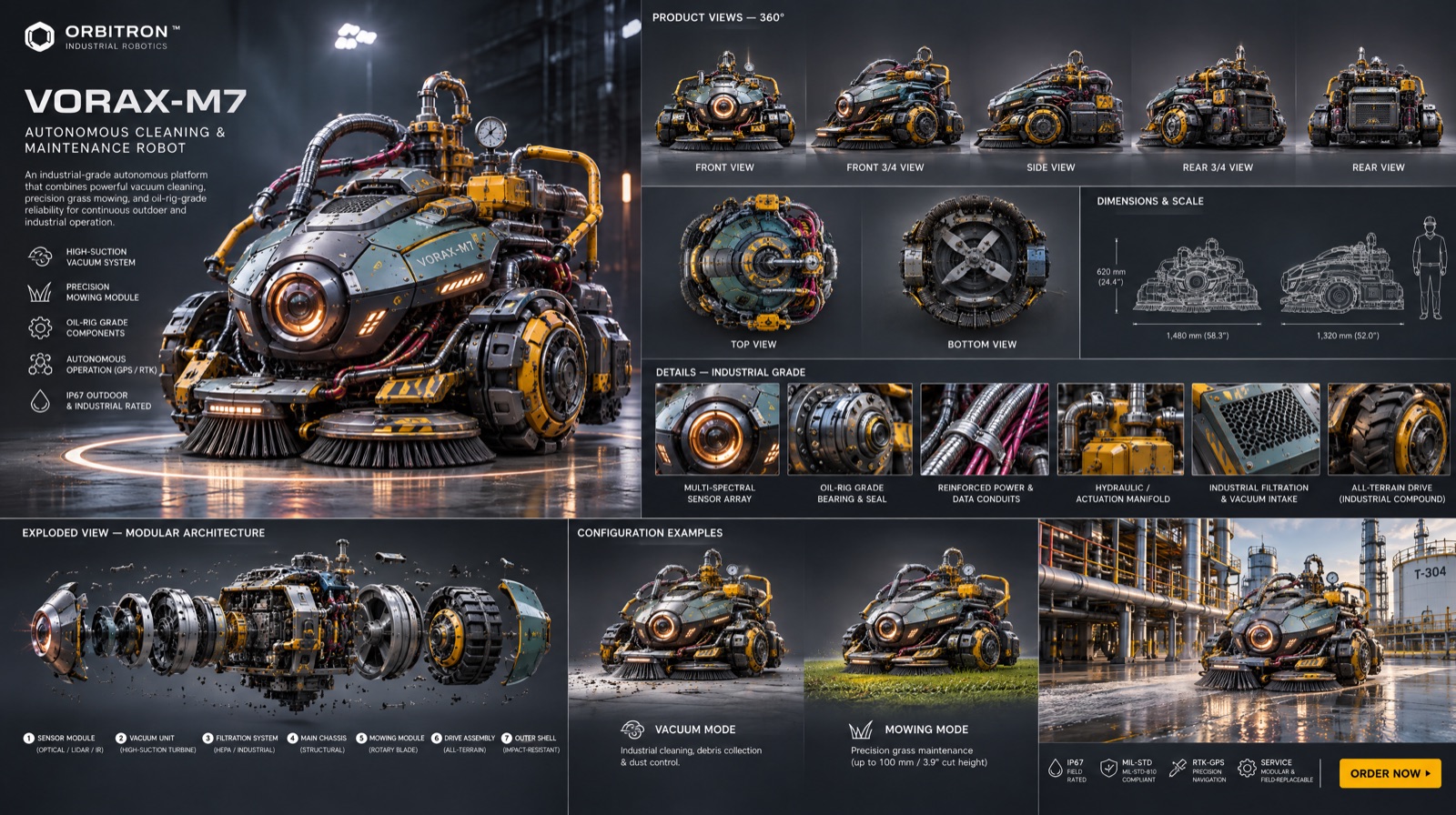
One reference image goes to all three models: a character sheet for a small industrial robot, with views from several angles.
The character sheet every model received as its one reference image.
The prompt asks each model to treat the sheet as a storyboard: assemble the unit part by part, move the camera between angles, and stay true to the sheet's look. This tests how well each model keeps to a reference image, and how much product-film camera it gives you without a camera parameter.
“animate this character sheet treating it as storyboard, follow closely the aesthetic and style with smooth camera move from each angle with zooms on details and body parts in 3D realistic view, device setting up moving and assembling with parts, no hard cuts …”
Same reference image for all three. Open a clip's prompt to see how its wording differs from the first.
Our take
We wanted something interesting, sci-fi and industrial-grade, and all three did well with it: Seedance was the most believable, and Kling did really well once we took the effects out of its prompt. For the price, MiniMax H3 wins this one.
Brief 3: a runner in New York, with FLUX 3
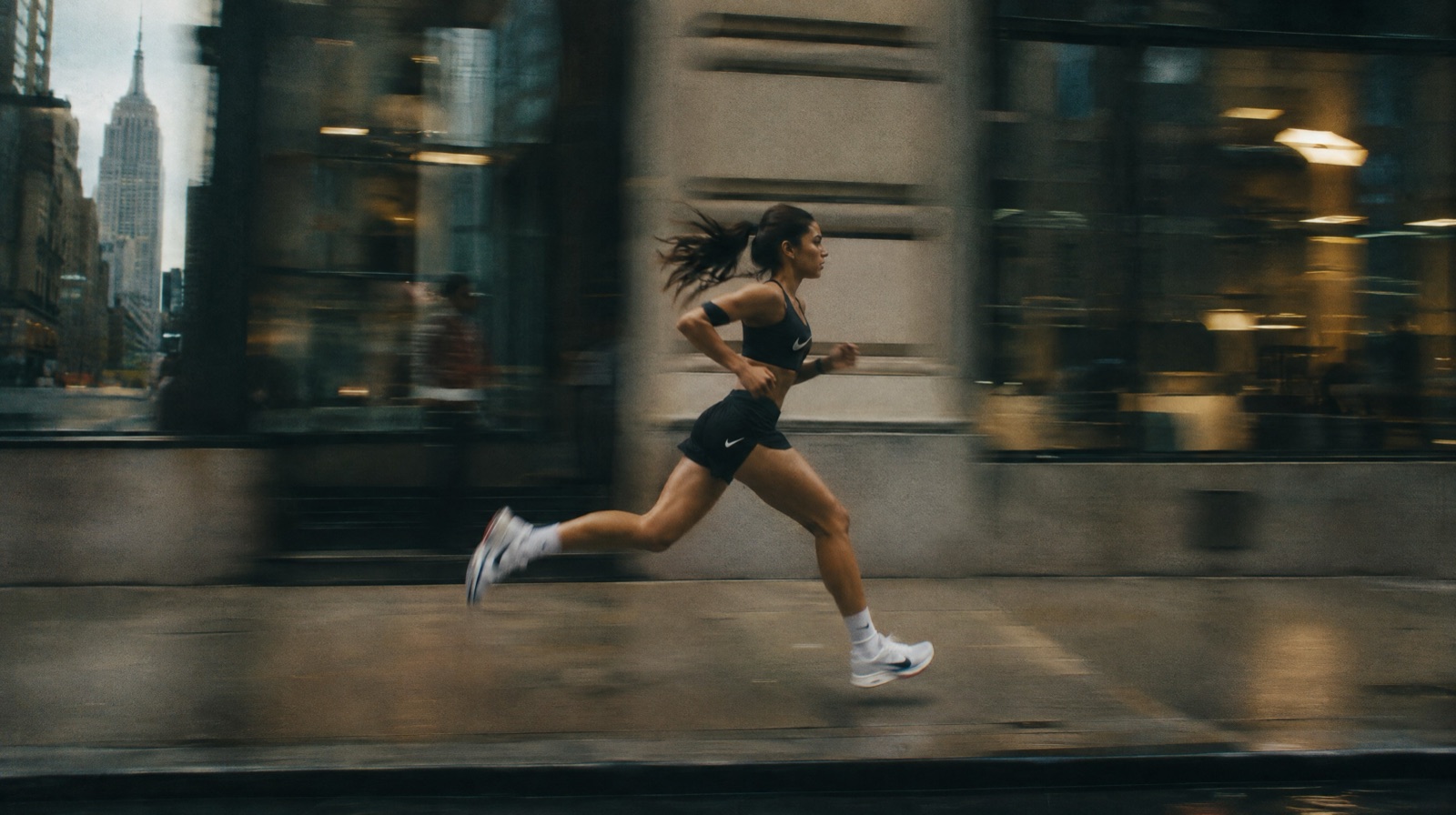
An athletic advert: a runner crossing a New York City pavement, fine film grain, strength and speed in the stride. This brief adds FLUX 3 Video beside Kling and H3, and it is the one Seedance could not do. Each model started from the same reference still.
The reference still the runner clips started from.
How the still goes in differs by model, as the table shows: Kling takes it as a reference image, H3 as its first frame, and FLUX as a start image. The prompt that went with it is short.
“nike advert, runner in the new york city. Moving accross pavement, fine greain, visible logo, characters strength and speed”
Kling VIDEO 4.0, MiniMax H3 and FLUX 3 Video on one clock. Seedance 2.5 returned no clip.
Our take
FLUX looked the most realistic and kept the film look throughout, with great weather, a wet pavement and passers-by we had not asked for, though faces turn a little plastic in close-up. Kling was good but more sterile and stutters at around eight seconds, and H3 was lower resolution and distorted, yet it was the only one that held the shot instead of cutting away.
Which model for which job
Observations from a small set of runs, not a benchmark. Each clip is the best of a few generations per model.
For fast sports realism, Seedance. For natural realism and a film look, FLUX. For value, MiniMax H3, which did more than its price suggests. Kling sits in between: close to Seedance on hard motion, for less, and the one that followed the sound brief best.
Seedance 2.5Best at
Sports realism with fast, extreme physics: the strongest motocross clip. The most believable take on the robot sheet too.
Where it fell short
Guardrails got in the way on the runner: content moderation rejected every run of the branded brief, so it has no clip there. The commentator we asked for arrived only at the very end. The flip still twists. The highest price of the set, $2.32 a clip.
Kling VIDEO 4.0Best at
Hard motion close to Seedance for $1.57 a clip, and sound: the commentator runs through both motocross clips, in sync. Strong on the robot sheet.
Where it fell short
Prompt adherence wavered: the rider ahead did things we had not asked for, and its effects gave unexpected results until we took the effects wording out of the prompt. On the runner it reads sterile in the zooms and stutters at around eight seconds.
MiniMax H3Best at
Value: $0.80 a clip, and the pick for the robot sheet at that price. On the runner it was the only model that held the shot from start to finish.
Where it fell short
The runner came back looking lower resolution and distorted. It never held the helmet view on the motocross brief, across every prompt we tried.
FLUX 3 VideoBest at
Natural realism. It kept the film look throughout, with great weather, a wet pavement and passers-by that made sense in the scene. One brief only in this round.
Where it fell short
Faces turn a little plastic in close-up, and it cut to other shots we had not asked for.
Shared across the set: rain, sunset, slow motion and synced sound came easily to every model, and the full helmet-cam backflip is still out of reach for all of them.
From$0.80per 10 s HD clip (MiniMax H3)
About3–5 minto a clip, three models in parallel
3models on one key, one API
Kling VIDEO 4.0
Reference videos carry the camera path. $0.157 per second at 720p.
The new part: audio-reactive motion transfer. Motion Studio, the open tool: a mannequin moves to the track's beat grid (moves time-stretched to the beats, energy from the audio), and exports a guide bundle: the guide clip at 1280×720, the audio, frame 0 and the beat times. A character still is made with FLUX.2 [klein] 9B, pose-matched to frame 0. Guide plus still go to the models that take a reference video; the character dances to your track.
Camera moves through the same guide. The guide already carries motion and beat. The next step puts the camera in it too: a camera path animated in Motion Studio, so the move is set once and every model that takes a guide video follows it. For LTX, the same path maps to settings.cameraMovement.
Where this comes from. One paragraph and two or three stills. Earlier audio-reactive work: the towers piece and the June flowers piece made in Genobi, and the camera-director workflows.
Run it yourself
The one task the Arena sends for Kling 4.0. Field names match Runware's Kling 4.0 schema (read 10 Nov); the prompt pattern is from Runware's own reference-videos guide.
// One Kling VIDEO 4.0 task on Runware (fields checked against schema.json, 10 Nov)
const res = await fetch("https://api.runware.ai/v1", {
  method: "POST",
  headers: { "Content-Type": "application/json",
             Authorization: `Bearer ${RUNWARE_API_KEY}` },
  body: JSON.stringify([{
    taskType: "videoInference",
    taskUUID: crypto.randomUUID(),
    model: "klingai:kling-video@4.0",
    positivePrompt: "Reference only the camera path and pacing of <<<video_1>>>. "
      + "Replace the mannequin with the character in <<<image_1>>>. …",
    inputs: {
      referenceVideos: ["https://…/guide.mp4"],   // the Motion Studio guide
      referenceImages: ["https://…/character.png"] // the Klein still
    },
    duration: 5,
    includeCost: true,
    deliveryMethod: "async"
  }])
});
Links: Motion Studio and model-arena repos (open source), the record files. One line at the foot: the player in this post is the open-source <model-arena> element; bring your own key.
Written byRadek RudnickiCreative technologist
Send one brief to three models.
Run the comparison in the Arena with your Runware key.